

Description
Date: 19 March, 2026, 13.00 UTC.
Estimated Time: 1 hr
Language: English
Summary of the lecture
The transition towards low-carbon steelmaking requires a combination of technologies, operational optimisation, and new energy carriers. In most decarbonisation pathways, hydrogen plays a central role — both as a reductant and as a fuel.
In this steelTalk, Joachim von Schéele, Global Director Commercialisation at Linde, explains how energy-efficient oxyfuel combustion supports decarbonisation in steel production and how hydrogen can be integrated into combustion systems without compromising performance. The session outlines the fundamentals of combustion processes, the benefits of conventional and flameless oxyfuel technology, and its applications in electric arc furnace (EAF) burners, ladle preheating, and reheating operations.
The lecture also presents results and operational experience from full-scale permanent use of oxyfuel systems operating with 100% hydrogen, highlighting performance outcomes and practical considerations for industrial implementation.
What you will learn:
- Understand the importance of combustion processes in the steel industry and how increased energy-efficiency supports decarbonisation.
- Understand the potential of using hydrogen as a fuel in the steel industry.
- Learn from results of full-scale permanent use of oxyfuel also with 100% hydrogen as a fuel.
Speaker Introduction
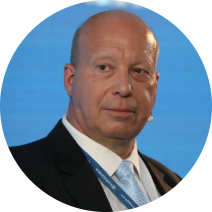
Joachim von Schéele
Global Director Commercialisation, Linde
Joachim von Schéele joined the industrial gases industry in 1996, and has since held many different positions there. After a decade in Asia, first in India as VP for South Asia and then in China heading Application Development & Sales for Asia-Pacific, he is since 2020 based in Munich, Germany, pursuing his current role at Linde.
Focusing on decarbonisation including use of hydrogen, he is driving the sustainability agenda supporting steel and other hard-to-abate industries to achieve measurable progress and success.
He has published more than 200 papers, mainly on energy and metallurgical production matters, and authored chapters in six books. He has served as a member of more than 30 boards of companies, associations, and research and education organizations. He holds seven patents related to metallurgical production.
He received his MSc and PhD from KTH Royal Institute of Technology in Sweden, where he also guest teaches.
Course Content

Course includes
- 1 Lesson